Cacio e Pepe
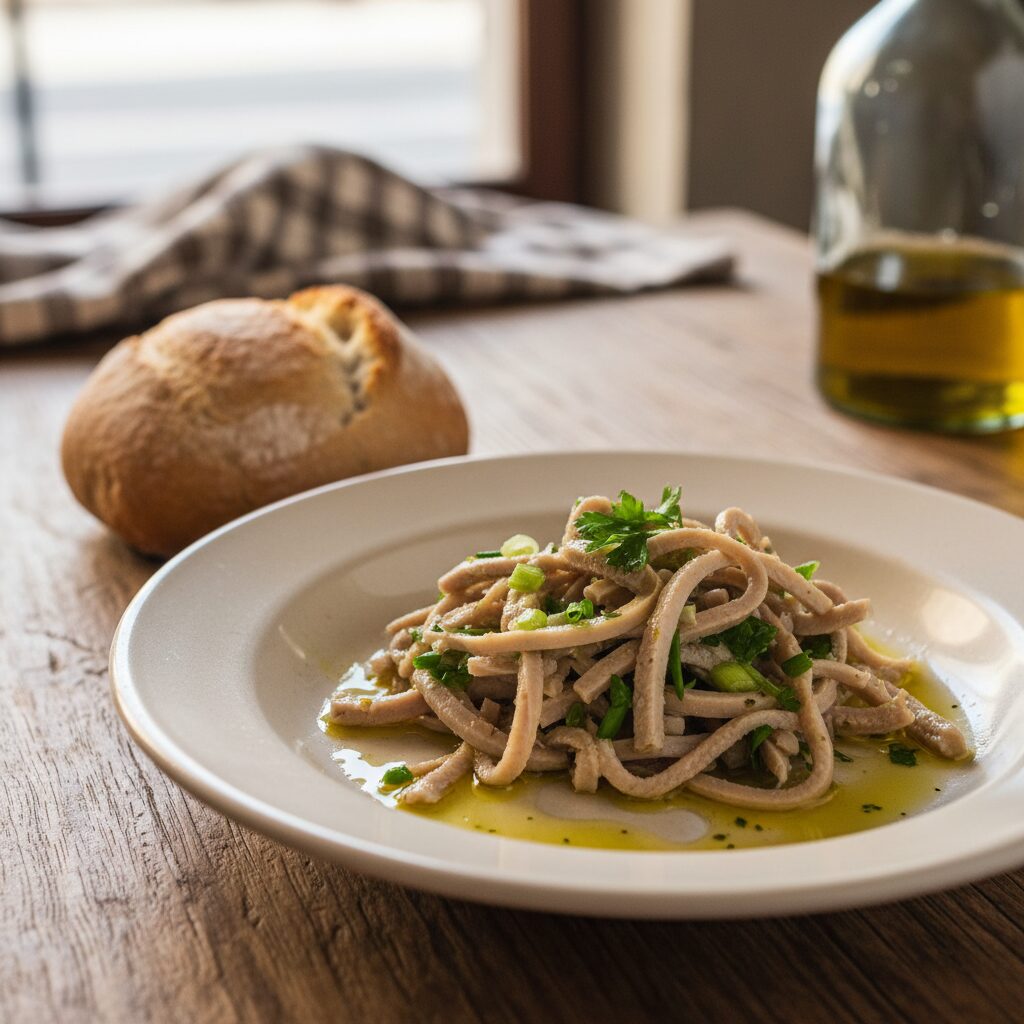
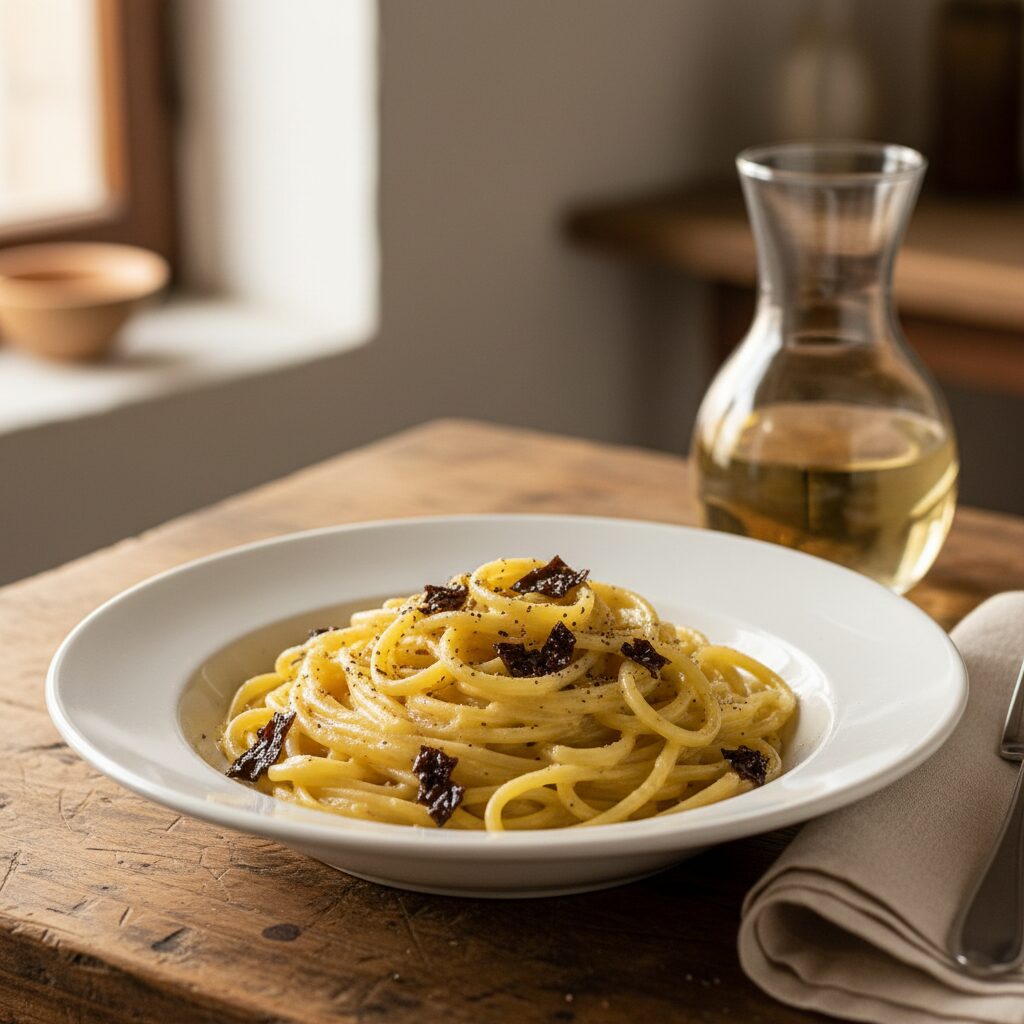
A historic Roman pasta coated in a velvety emulsion made purely from sharp Pecorino Romano cheese, freshly crushed black pepper, and starchy water.
- Prep
- 10 min
- Cook
- 15 min
- Total
- 25 min
- Servings
- 4
- Difficulty
- Medium
- Calories
- 520 kcal
Equipment
- •Large pasta pot
- •Wide heavy skillet
- •Mortar and pestle
- •Microplane or fine grater
- •Tongs
- •Heatproof mixing bowl
Nutrition
Per serving, approximate
- Calories
- 520 kcal
- fat
- 16 g
- carbs
- 68 g
- fibre
- 3 g
- protein
- 24 g
- calories
- 520 kcal
Instructions
- 1
Fill a large pot with water, add the sea salt sparingly, and bring to a rolling boil.
- 2
Crush the whole peppercorns coarsely in a mortar and pestle.
- 3
Toast the crushed peppercorns in a wide skillet over medium heat for two minutes until aromatic.
- 4
Ladle two small scoops of hot boiling water into the skillet with the pepper to create a flavour base.
- 5
Drop the tonnarelli into the boiling water and cook until two minutes shy of al dente.
- 6
Place the finely grated Pecorino Romano into a ceramic mixing bowl.
- 7
Whisk a small ladle of lukewarm pasta water into the cheese to form a thick, smooth paste.
- 8
Lift the pasta directly into the skillet using tongs, tossing over low heat to coat in pepper liquid.
- 9
Remove the skillet completely from the heat source and let it cool for thirty seconds.
- 10
Add the cheese paste to the warm pasta in the skillet.
- 11
Stir and toss vigorously, adding tiny splashes of warm water until a glossy, lump-free emulsion coats every strand.
- 12
Serve immediately in warm bowls with an extra crack of pepper over the top.
Chef's tips
Grate the cheese as finely as possible on a microplane so it melts instantly without clumping. The biggest failure point is excessive heat; always pull the skillet off the burner before adding the cheese paste, as temperatures above 65 degrees C cause the proteins to separate into rubbery strings.
Ingredient substitutions
- tonnarelli → dried bronze-die spaghetti or bucatini
- pecorino romano DOP → a mix of three-quarters Pecorino Romano and one-quarter Parmigiano Reggiano to soften the saltiness
Storage
This dish cannot be stored or frozen because the delicate emulsion will break completely once cooled.
Reheating
Reheating is not recommended, though cold leftovers can be eaten as a room-temperature frittata addition.
Common mistakes to avoid
- •Adding the cheese paste to a boiling hot pan, which coagulates the proteins into sticky clumps.
- •Over-salting the cooking water, making the final dish unpleasantly salty due to the cured pecorino.
- •Using pre-ground black pepper, which lacks the vibrant essential oils of freshly toasted whole peppercorns.
Serving suggestions
Cooked Cacio e Pepe?
Sign in to save this recipe to a collection. Bookmarking works without an account — it stays on this device.
Sign in for collectionsSimilar recipes
Dishes with the same spirit, spice level and course.
More from Lazio
Cooking that shares the same kitchen and pantry.
Recipes using similar ingredients
Use what you already bought for this recipe.