Pistoccu
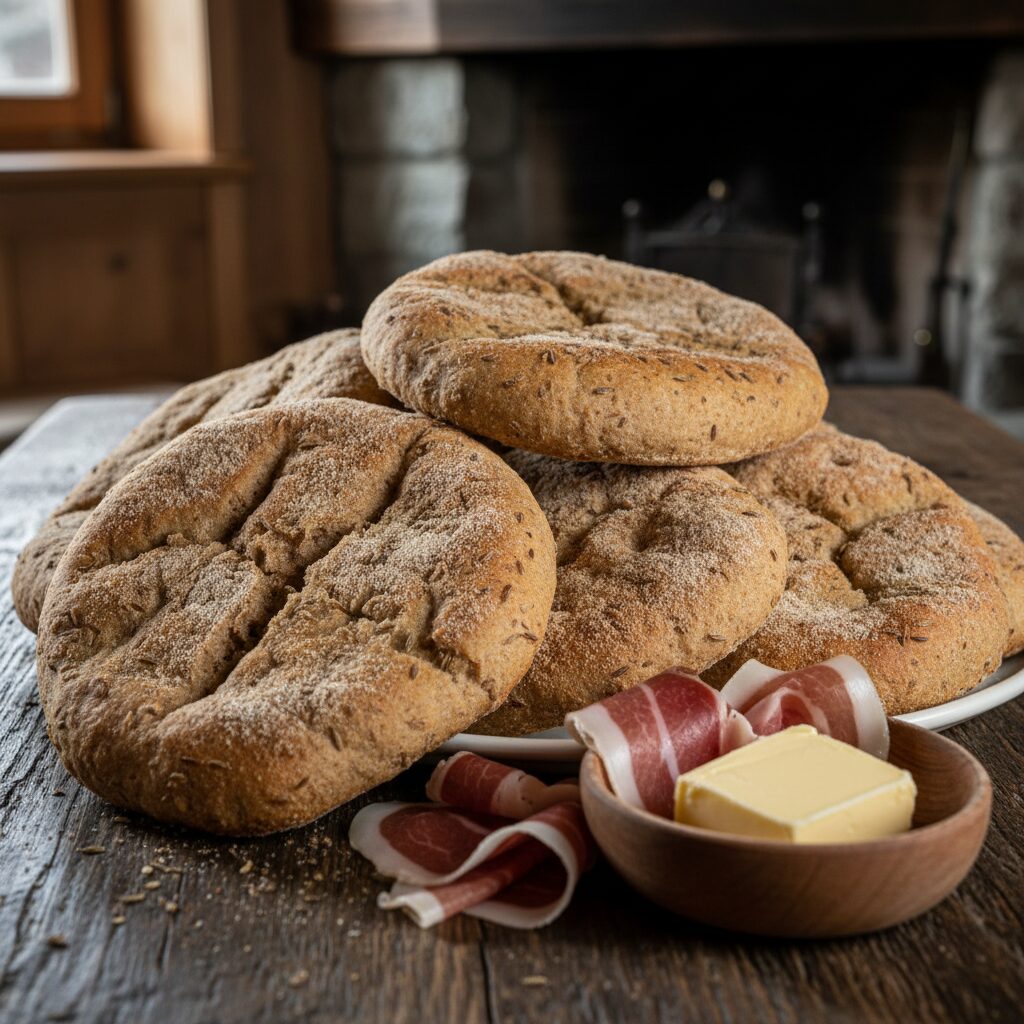
A traditional twice-baked Sardinian flatbread from Ogliastra, also called pane pistoccu. It is thicker and sturdier than carasau, baked until dry, and lightly sprinkled with water before serving.
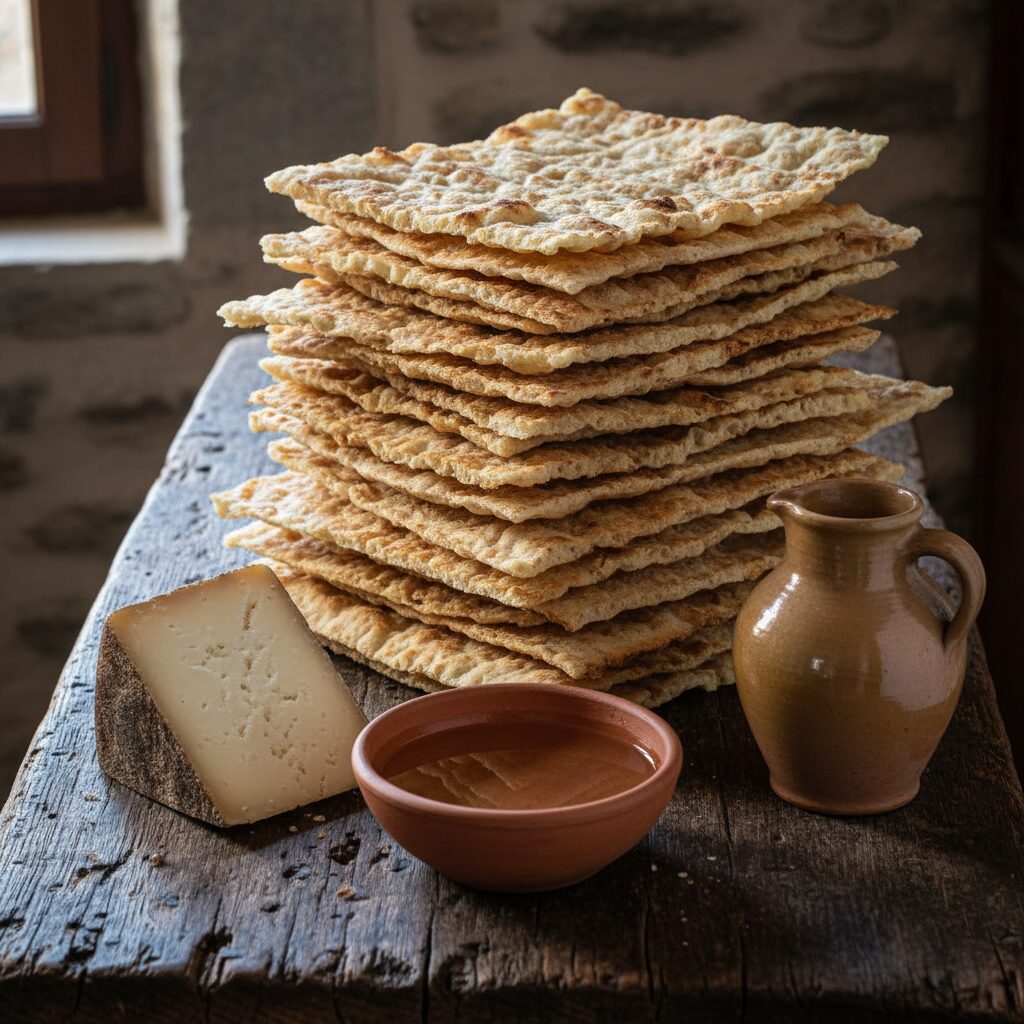
- Prep
- 40 min
- Cook
- 25 min
- Total
- 65 min
- Servings
- 6
- Difficulty
- Medium
- Calories
- 310 kcal
Equipment
- •Baking stone or heavy baking tray
- •Rolling pin
- •Mixing bowl
- •Linen tea towels
- •Pastry brush
Nutrition
Per serving, approximate
- Calories
- 310 kcal
- fat
- 1.5 g
- carbs
- 64 g
- fibre
- 3.5 g
- protein
- 11 g
- calories
- 310 kcal
Instructions
- 1
Dissolve the yeast in 100 ml of the lukewarm water in a small bowl and let it sit for five minutes until lightly frothy.
- 2
Combine the semolina and bread flour in a wide mixing bowl, make a well in the centre, and pour in the yeast liquid.
- 3
Add the remaining water and salt, then stir with a wooden spoon until a shaggy dough comes together.
- 4
Tip the dough onto a clean wooden board and knead vigorously for ten minutes until smooth, firm, and elastic.
- 5
Shape the dough into a smooth ball, cover with a damp cloth, and rest for one hour at room temperature until doubled in size.
- 6
Divide the rested dough into six equal pieces and shape each into a smooth oval ball.
- 7
Roll each ball out on a lightly floured surface into a rectangular sheet roughly 3 to 4 mm thick, keeping it distinctly thicker than paper-thin carasau.
- 8
Place the rolled dough sheets between floured linen cloths and leave to prove for thirty minutes.
- 9
Preheat your oven and baking stone to the highest setting, at least 250 degrees C, for thirty minutes.
- 10
Slide one sheet of dough onto the hot stone and bake for two to three minutes until it puffs up like a balloon.
- 11
Remove the puffed bread immediately, carefully slit around the edges with a sharp knife to separate the top and bottom sheets, and lay them flat.
- 12
Return the separated sheets to the oven at 180 degrees C for five minutes until completely crisp, dry, and golden, then cool entirely before moistening lightly with water to eat.
Chef's tips
Do not roll the dough too thinly; pistoccu must retain a rustic thickness of around 3 to 4 mm to separate into robust halves. Work quickly when slitting the hot ballooned bread so the steam does not condense inside. When ready to eat, moisten only the rough interior side with a few drops of water and let it rest for one minute until pliable.
Ingredient substitutions
- fresh yeast → 3 g of active dry yeast or instant yeast dissolved directly into the flour
- strong white bread flour → 100% fine durum wheat semolina for a denser, strictly traditional crumb
Storage
Store completely dried, unmoistened sheets in a cool, dry place in paper bags or cloth sacks for up to six months.
Reheating
To serve, splash the rough side lightly with water and wait two minutes; no reheating is required.
Common mistakes to avoid
- •Rolling the dough too thin like pane carasau, which makes the bread brittle rather than substantial and chewy when moistened.
- •Baking on a cold oven tray instead of a preheated stone, preventing the rapid puff needed to separate the layers.
- •Soaking the bread in water rather than lightly flicking water onto the rough side, which turns it soggy.
Serving suggestions
Cooked Pistoccu?
Sign in to save this recipe to a collection. Bookmarking works without an account — it stays on this device.
Sign in for collectionsSimilar recipes
Dishes with the same spirit, spice level and course.
More from Sardinia
Cooking that shares the same kitchen and pantry.
Recipes using similar ingredients
Use what you already bought for this recipe.